Meet Mira
Visual Designer · AI Experience Support
Company
Mirastar Federal Credit Union
Industry
Fintech · Credit Union
Role
Visual Designer · UX Support · AI Experience
Year
2025
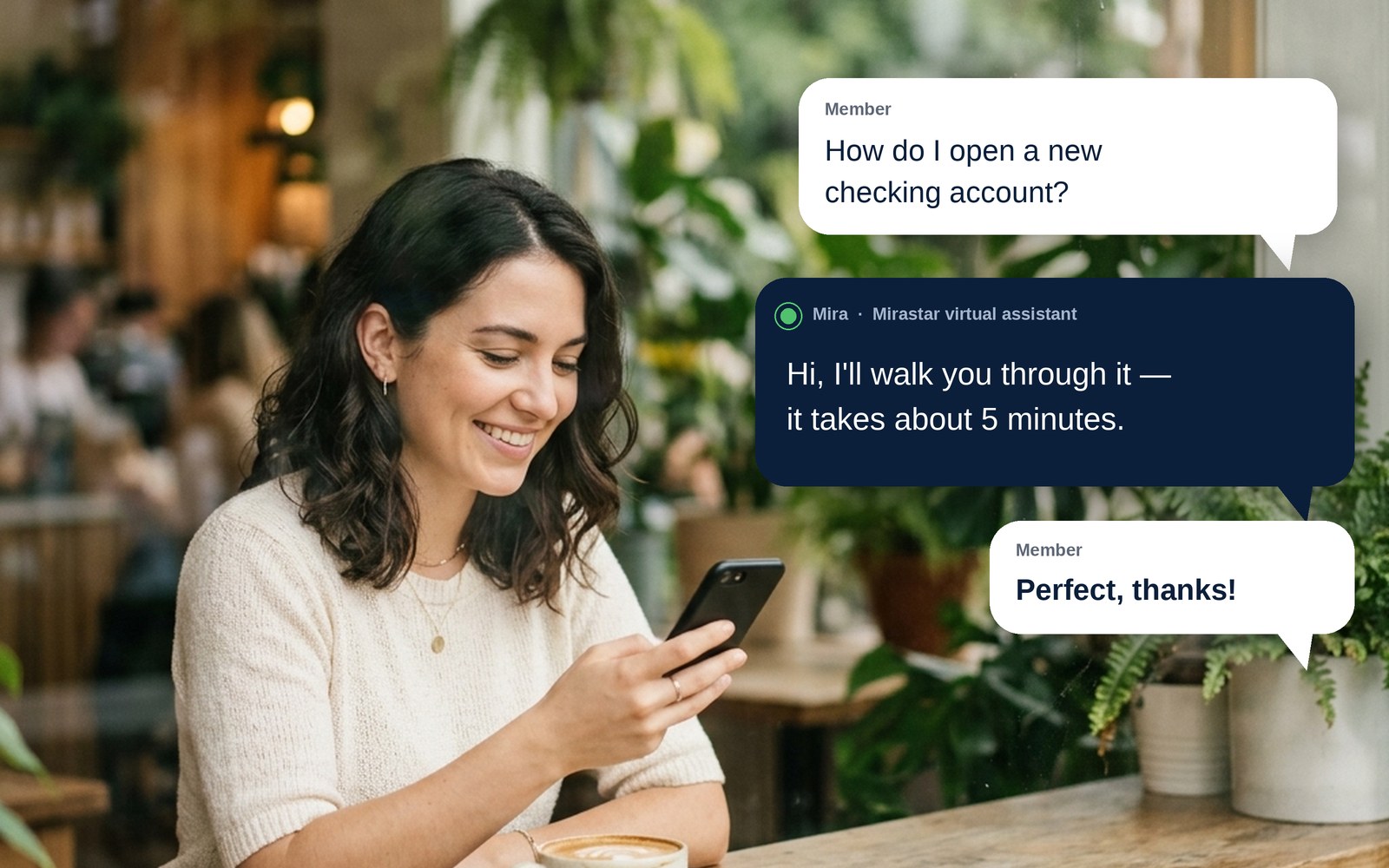
Trust + speed for credit union members.
Mirastar Federal Credit Union set out to improve how members find information and get support online. The team launched Mira, an AI-powered virtual assistant (built on the Glia platform), to provide faster, more accessible help while reducing friction in the member experience.
As Visual Designer, I collaborated with marketing, internal stakeholders, and the implementation team to shape Mira's visual experience, support user testing, and optimize how the assistant integrated across the website — from first impression to hand-off.
- Increase member engagement
- Improve digital support accessibility
- Encourage self-service interactions
- Reduce friction in finding information
- Get answers faster
- Easily navigate products and services
- Access support without leaving the website
- Feel confident Mira is trustworthy
My responsibilities — Visual design, UX support, AI assistant experience design, user testing & feedback collection, and cross-functional collaboration.
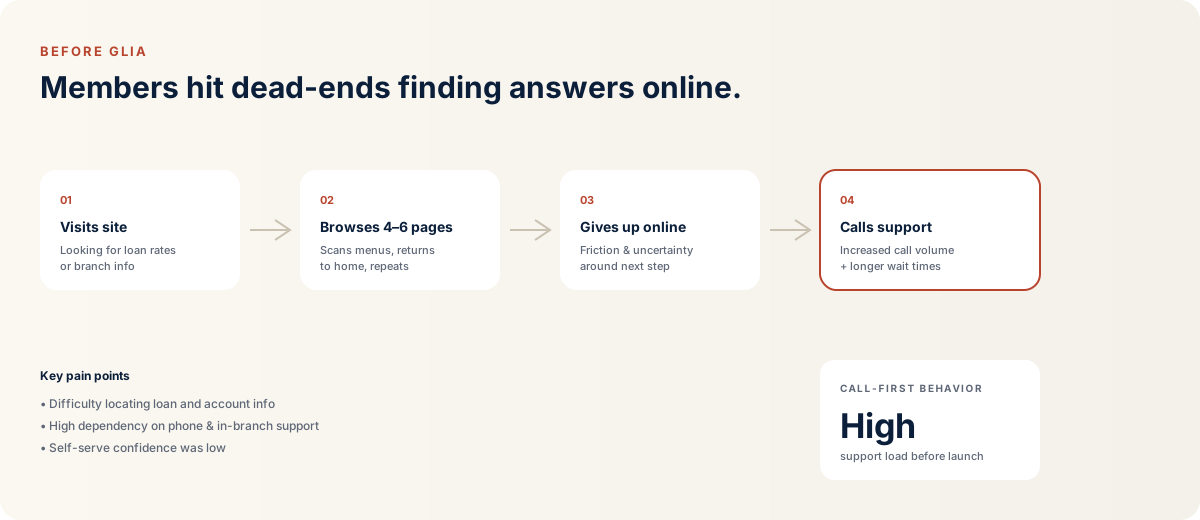
Members struggled to find answers — and called instead.
Before the assistant launched, online sessions often ended without resolution. The team needed a way to surface the right information at the right moment, without overwhelming the website.
Information was hard to find
Members struggled to quickly locate loan rates, account info, and branch details — leading to abandoned sessions.
Heavy support dependency
Phone and in-branch support carried questions the website should have answered, increasing wait times.
Self-serve felt unsafe
Without guided cues, members weren't confident enough to complete tasks online on their own.
Mapping the member journey, before and after.
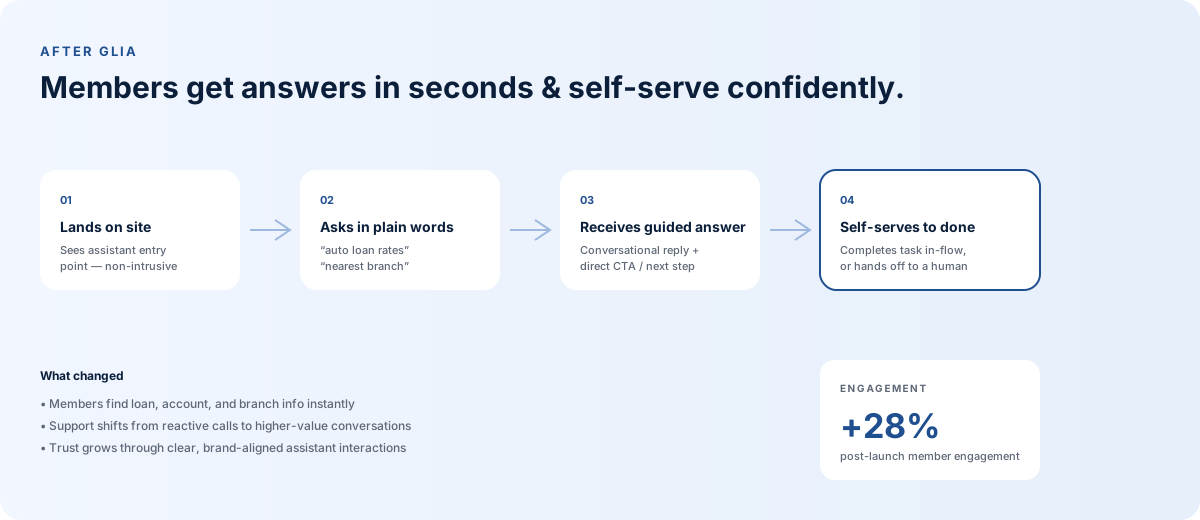
We mapped how members tried to get help today and compared it to a Glia-assisted future state. The gap was clear: friction wasn't a content problem, it was a guidance problem.
- Members primarily sought account information
- Loan and banking services were a top query
- Branch and contact info had high search intent
- General support guidance needed clearer paths
- Placement strategy & entry-point visibility
- Call-to-action hierarchy
- Trust-building visual elements
- Brand consistency & accessibility
- Mobile responsiveness
From stakeholder alignment to iterative refinement.
Discovery & stakeholder alignment
Worked with internal stakeholders and implementation partners to map common member questions, key support workflows, and brand & compliance requirements.
Experience design
Designed Mira's visual identity and interface treatments so the assistant felt visible without distracting — balancing brand consistency, accessibility, and mobile responsiveness.
User testing
Participated in testing sessions to evaluate discoverability, ease of interaction, user confidence, and navigation success — collecting feedback on entry-point visibility and messaging clarity.
Iteration & optimization
Refined Mira's visual hierarchy, onboarding cues, and conversational entry points based on stakeholder feedback and testing insights.
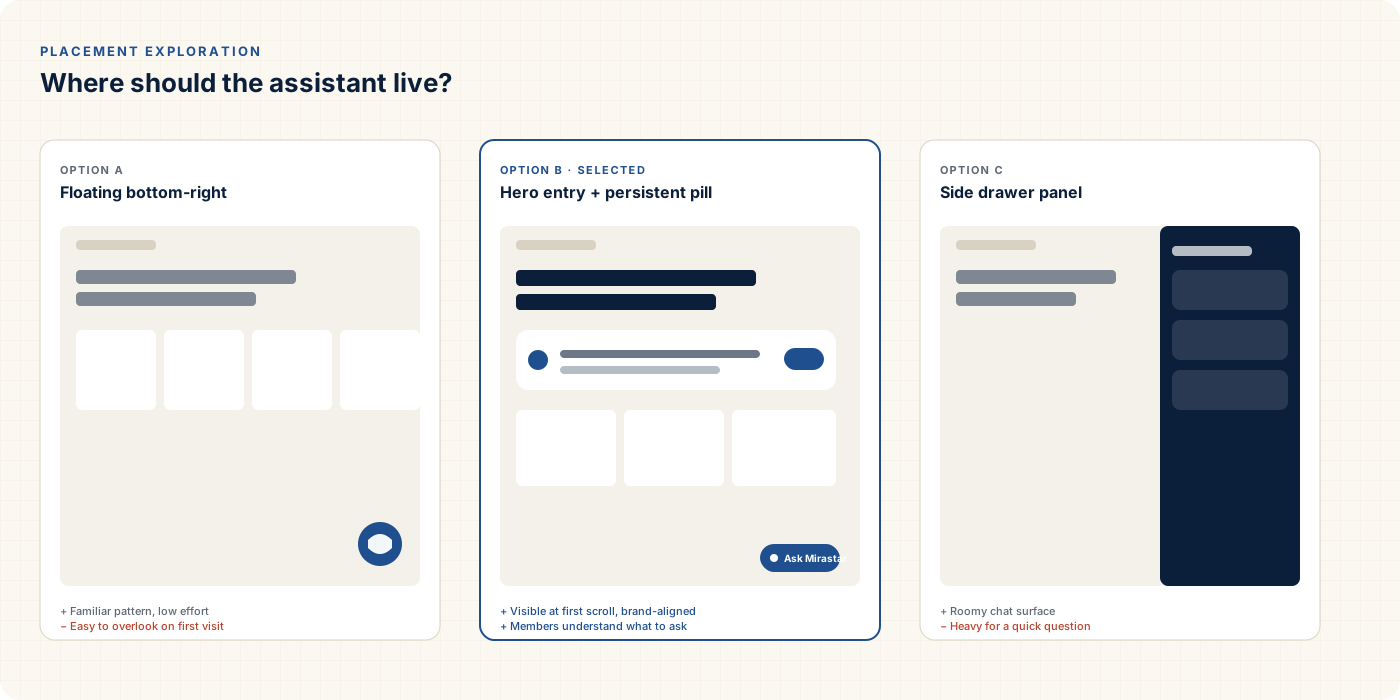
What testing revealed — and what we changed.
Members didn't open the assistant unless they trusted it would help. Small changes to entry-point visibility and starter prompts moved the needle the most.
Entry point visibility
Members didn't always notice Mira on first visit. We refined the launcher and supporting cues so the assistant felt inviting and on-brand.
Messaging clarity
Initial copy felt generic. Rewriting Mira's opening line and starter prompts raised engagement on first open.
Interaction guidance
Bringing in clearer next-step cues inside Mira's responses reduced extra navigation and lifted task completion.
Mira — conversational, on-brand, always one tap away.
Mira lives across desktop and mobile with a friendly owl identity, on-brand visuals, and a clear path to a human specialist when conversations need one. Members can ask in plain words and get a guided next step in seconds.
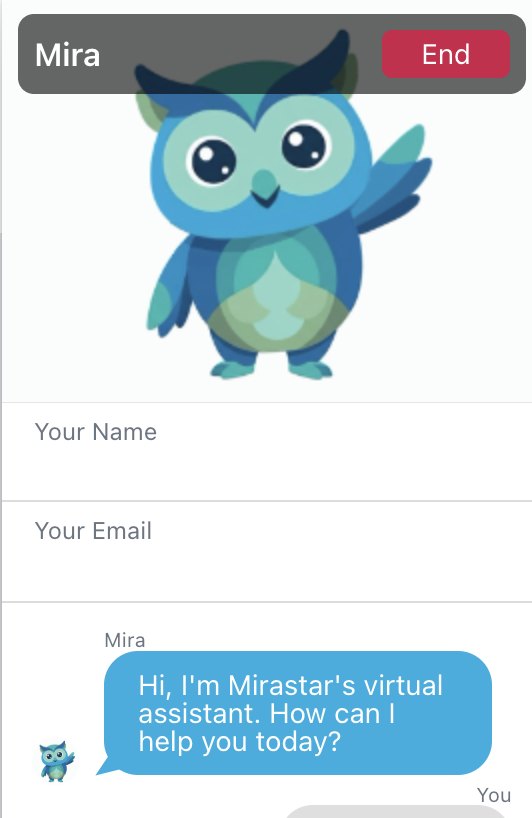
Mira — a friendly owl mascot members instantly recognize.
Persistent launcher with a clear opening prompt + name/email capture.
Seamless escalation to a live member specialist when needed.
28%
increase in customer engagement following Mira's launch
- Increased engagement with digital support experiences
- Improved discoverability of online resources
- Enhanced member self-service capabilities
- Positive stakeholder adoption across teams
Mira launched as a digital support experience that empowered members to self-serve more effectively, contributing to a 28% increase in customer engagement post-launch. The work supported a successful rollout of AI-assisted member support and strengthened Mirastar's digital-first service strategy.
What designing AI experiences taught me.
Designing for trust
Members give an AI assistant trust through small details — a friendly identity (Mira's owl mascot), brand consistency, and an obvious hand-off to a human when needed.
Conversational UX is content design
The biggest engagement lifts came from rewriting Mira's prompts and replies, not redesigning UI. Tone and structure carry the experience.
Accessibility is a feature
Keyboard, screen reader, and contrast considerations broadened who could comfortably self-serve through Mira.
AI works with humans, not instead of them
Mira performed best when designed as a smart triage layer that handed members off seamlessly to a specialist when stakes were high.
Credits — Mira powered by the Glia conversational AI platform · Collaboration with Mirastar marketing, product and implementation teams.